Jury Instructions
Pay close attention to words like “reasonable,” “willful,” or “substantial.” These don’t have precise definitions. You’re invited to decide what those words mean in this case.

Your rights as a juror, explained plainly.
The moment you receive a jury summons, you are invited to hold more power than most people realize.
I helped send a man to prison for 40 years. I had no idea.
Fairfax County juror
Paul served on a jury that convicted Frederick Turner of drug dealing. He later discovered that Frederick received a mandatory 40-year sentence — and died in prison. The judge called the sentence “excessive” and “wrong,” but the legislature had left him no choice.
Paul had a choice. He just didn’t know it.
Read Paul’s Full StoryCases that reach trial aren’t necessarily the strong ones. Weak evidence, questionable charges, and overly aggressive prosecutions often reach juries.
You might be the first person to seriously scrutinize whether a prosecution makes sense. If something feels off, trust that instinct.
I helped send a man to prison for 40 years. I had no idea.
Fairfax County juror
Paul served on a jury that convicted Frederick Turner of drug dealing. He later discovered that Frederick received a mandatory 40-year sentence — and died in prison. The judge called the sentence “excessive” and “wrong,” but the legislature had left him no choice.
Paul had a choice. He just didn’t know it.
Read Paul’s Full StoryCases that reach trial aren’t necessarily the strong ones. Weak evidence, questionable charges, and overly aggressive prosecutions often reach juries.
You might be the first person to seriously scrutinize whether a prosecution makes sense. If something feels off, trust that instinct.
What happens before you ever sit in the jury box.
They decide which charges to bring, whether to offer a plea deal, and how to present evidence, all with enormous discretion.
They likely refused a plea deal. It may be because they didn’t do it or because the deal was unjust.
Many defendants sit in jail for months because they can’t afford bail, pressuring them into plea deals regardless of guilt.
Before trial, there’s a jury selection process called “voir dire.” Here’s what happens.
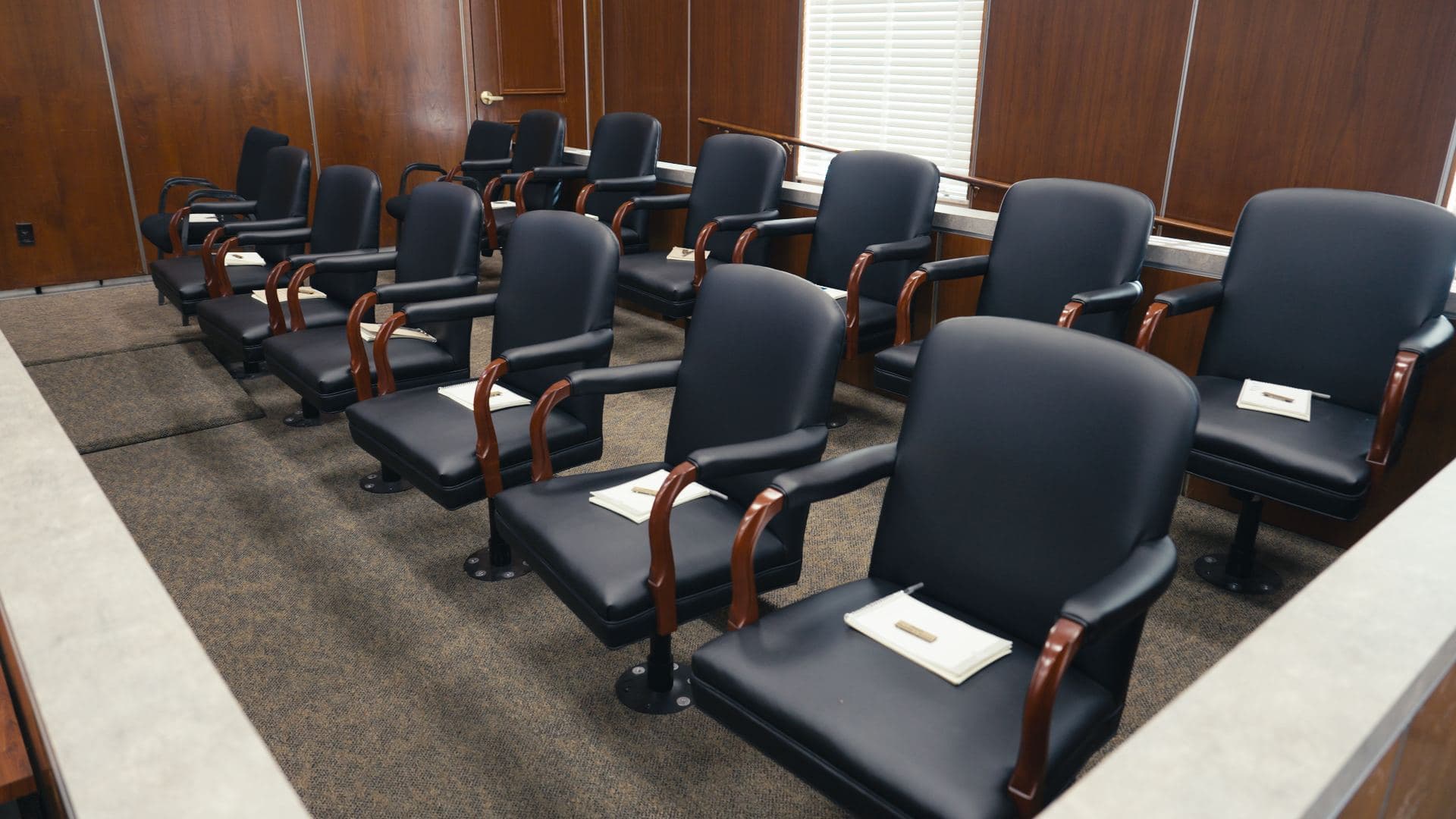
The judge asks about employment, potential conflicts, and whether you know anyone involved.
Prosecution and defense explore your views on criminal law and fairness.
Answer questions truthfully and fully, but you’re not required to volunteer your views on jury independence. Your duty is to your conscience.
Either side can dismiss jurors “for cause” or through “peremptory challenges” (no reason required).
From the courtroom to the jury room, what to watch for and what you can do.
During the Trial
Pay close attention to words like “reasonable,” “willful,” or “substantial.” These don’t have precise definitions. You’re invited to decide what those words mean in this case.
Some judges won’t answer, but you can draw your own conclusions from unanswered questions.
Deliberations
The Constitution requires unanimous verdicts. Every juror’s voice matters equally.
You are never required to change your vote just because you’re outnumbered. It takes twelve jurors to convict, but only one to prevent injustice.
Imagine 100 pills: 99 safe, one poison. Would you take one?
Reasonable doubt includes whatever gives you logical reasons to hesitate.
True, but misleading. The bar is still extraordinarily high.
But doubts from missing evidence are absolutely reasonable.
Criminal convictions may even require far more certainty.
Important: You can still acquit if conviction would be unjust, even without doubt about the facts.
Never see a jury
95% of criminal cases never go to trial. They end in plea bargains. Prosecutors can punish defendants who choose to go to trial by “stacking” charges and threatening mandatory-minimum sentences that can’t be shortened by a judge. Defendants who exercise their right to trial face the “trial penalty,” harsher sentences than if they’d pled guilty.
When a defendant does appear before a jury, they’ve made a courageous choice. They’re asking you to actually hear their case.
Every time a jury takes its role seriously, it reinforces the constitutional promise that citizens, not just prosecutors, decide justice.
If the jury convicts
Nearly impossible to reverse.
Appeals only review legal errors, not whether the jury was right
Challenges based on evidentiary mistakes rarely succeed
New trials based on new evidence are extraordinarily rare
Your vote may be the only check on a wrongful conviction.
If the jury acquits
Absolute and final.
The prosecution cannot appeal, the case is over
Double jeopardy protects absolutely, no retrial
The government cannot keep trying until it wins
Jurors can acquit with confidence. It cannot be overturned.
What people ask most about juror rights.
Yes. The Supreme Court has recognized jurors’ rights for centuries. Chief Justice John Jay, John Adams, and Alexander Hamilton all affirmed jury independence.
Jurors cannot be punished for their verdict. This is firmly established law.
Look at Virginia statutory language. You’ll find words like “without justification,” “unreasonably,” and “substantially.” These aren’t accidents. A “substantial” amount isn’t a fixed number. An “unreasonable” mistake isn’t defined precisely. These words explicitly ask for your judgment.
This concern often points to Jim Crow juries. Historically, racist juries sometimes acquitted dangerous criminals. That was a racist legal system problem, not a jury independence problem. The solution is fair jury selection and diverse juries, not removing jury independence.
Jury independence can protect minorities more often than harm them when combined with fair jury selection.
Legal guilt (the law was broken) and moral guilt (the person deserves the consequences) are not the same thing. They can overlap, but your job includes considering both.
Your Verdict Counts
Know Your Rights
as a Juror
Everything on this page, distilled into a card that fits in your wallet. Download it, print it, keep it for jury day.
Download Wallet CardPDF · Business card size · Print double-sided
Convictions are nearly impossible to overturn. Acquittals cannot be overturned at all. If you have significant doubts, vote not guilty.